
Call Us
+91 97 97 97 21 75Call Us
+91 97 97 97 21 75
“I had recently gone on a trek to the valley of flowers with JustWravel. It was my first ever treking experience and had a wonderful time doing it with JustWravel. Since I was a beginner I was pretty doubtful whether I would be able to complete the trek. But our guides where exceptionally good at what they were doing and helped me through out the trek.This trip was indeed a good start to my trekking journey and I m happy that i did it with JustWravel.”

mary dominic
“Valley of Flowers and Hemkund Sahib Trek - a Dream made real with JustWravel I recently completed my first trek to Valley of Flowers and Hemkund Sahib with JustWravel, and it was an amazing experience! The trek was managed beautifully with everything well-organized and on time. A big shoutout to our trek leaders, Rahul and Vijay, who ensured our safety, motivated us throughout, and even went out of their way to support another group during an incident. Their humility, punctuality, and leadership made the journey truly memorable. Special mention to the cook at Ghangaria for serving delicious meals after our tiring treks. The group members were equally wonderful, making it a complete experience. Thank you JustWravel – looking forward to many more treks with you!”

Vipul Sood
“Just came back from an adventure of a lifetime with Justwravel. Infinite memories, new friendships and a plethora of emotions all wrapped up together in this adventure. Right from the start to the last minute, all arrangements were in place, even in rainy conditions. Alongwith friendly and experienced leaders like Rathi sir and kamlesh sir - we explored both valley of flowers and hemkund sahib right as per plans. Travel, acco, trek assistance, and expert need were all right as expected, with really good food all along. With no hiccups, Justwravel made this a unforgettable experience. Go for it!”

Ravi Ahlawat
“Had an amazing time trekking to Valley of Flowers with JustWravel! Food, stay, staff - everything was great. Special thanks to trek lead Kavita for making the experience even more special. Highly recommend JustWravel for this trek!”

Tanisha Johat
“Did the Valley of flowers trek with Just wravels. Amazing experience as always.Rahul was a great trek leader- very experienced and really made the entire experience a very smooth one.”

Aashna Singh
“Just returned from the Valley of Flowers trek, and I’m still in awe of everything we experienced — the surreal beauty of nature, the peaceful trails, and above all, the fantastic coordination by the JustWravel team. This wouldn’t have been half as memorable without our trek captain Kavita, who brought so much positivity and strength to the group. She was not only our leader but also a constant motivator and a great companion throughout the journey. From managing the pace of the group to keeping spirits high during tough climbs, it was simply outstanding.”

Praveen Kumar
“Had an amazing experience trekking to Valley of Flowers and Hemkund Sahib with JustWravel! The views were surreal, the group was fun, and everything was super well-organized — from stays to meals. Big thanks to the trek lead[ kavita] for their constant support and positive energy”

Adithi L
“I recently went on a solo trip with JustWravel to the Valley of Flowers and Hemkund Sahib, and the entire experience was truly memorable. From the start, the arrangements were well-managed. The food was delicious, and the stays provided were clean and comfortable. On the first day, there was a bit of an issue with the water supply, but given the terrain and remote location in the mountains, it's understandable. After that, everything ran smoothly be it food, stay, or overall coordination. One of the highlights of the trek was our trek leaders, Kamlesh and Kavita. Both were extremely friendly, supportive, and active throughout. They ensured that no one missed meals, took care of everyone’s health, and kept the group’s energy high. Trekking with them made time fly, and their presence added a lot of positivity to the journey. Overall, it was a wonderful experience and I’d definitely recommend JustWravel for anyone planning a Himalayan trek especially if you're a solo traveler looking to join a like minded group.”

Raj Arpan Patel
“We generally bring memories from trekking trips. But there are some trekking trips from where we also bring relationships that lasts forever. My recent trek to Valley of Flowers and Hemkund Sahib is just one of those trip where I build relationships with complete strangers from all parts of India. First and foremost, the credit goes to our trek leader Ms Kavita Rajput (a_boho_girl, Dhaniya, and of course Kurkure) who not only astoundingly led the trek but also crafted a bondage between group members. She was very well assisted by Kamlesh and both of them worked beyond our expectation to make this trek successful and memorable for everyone. Towards the end of the trek people were singing “Me kahin kavi naa ban jaoon tere trek me ye Kavita”.”

Binay Mohanty
VIDEOS
posts
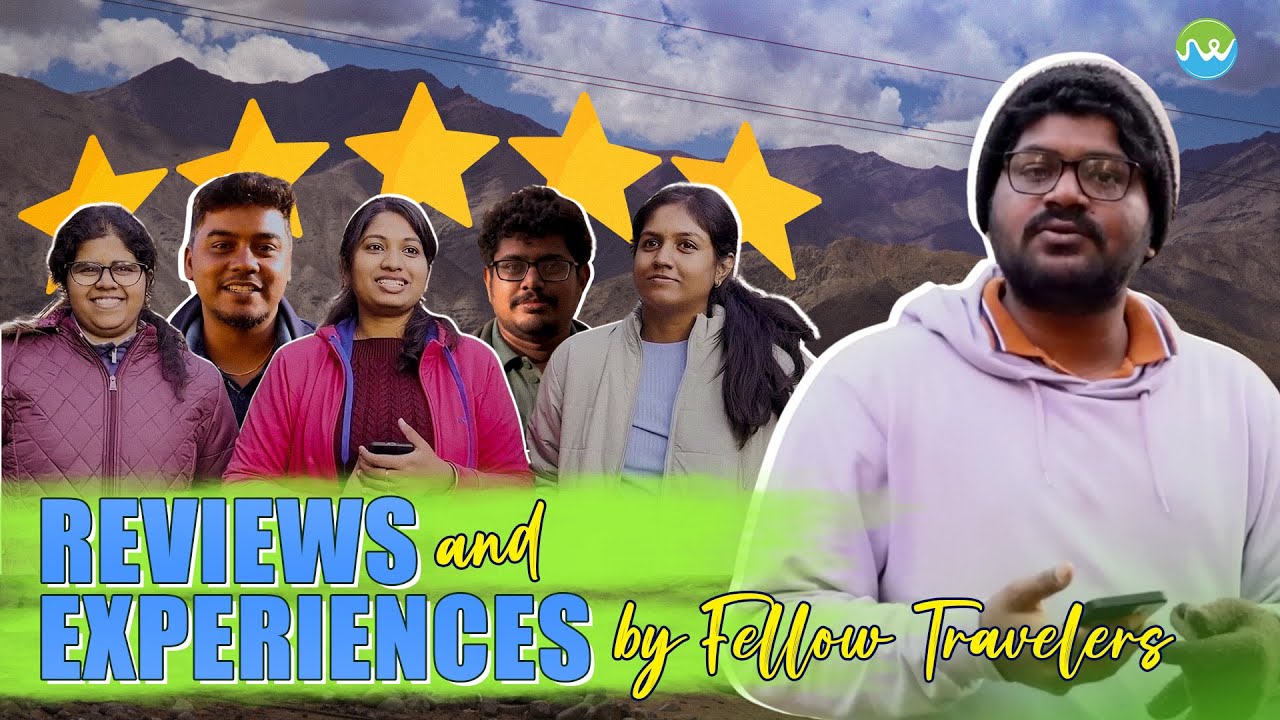
REVIEWS
mary dominic
I had recently gone on a trek to the valley of flowers with JustWravel. It was my first ever treking experience and had a wonderful time doing it with JustWravel. Since I was a beginner I was pretty doubtful whether I would be able to complete the trek. But our guides where exceptionally good at what they were doing and helped me through out the trek.This trip was indeed a good start to my trekking journey and I m happy that i did it with JustWravel.

Valley of Flowers Trek
Try YourselfVipul Sood
Valley of Flowers and Hemkund Sahib Trek - a Dream made real with JustWravel I recently completed my first trek to Valley of Flowers and Hemkund Sahib with JustWravel, and it was an amazing experience! The trek was managed beautifully with everything well-organized and on time. A big shoutout to our trek leaders, Rahul and Vijay, who ensured our safety, motivated us throughout, and even went out of their way to support another group during an incident. Their humility, punctuality, and leadership made the journey truly memorable. Special mention to the cook at Ghangaria for serving delicious meals after our tiring treks. The group members were equally wonderful, making it a complete experience. Thank you JustWravel – looking forward to many more treks with you!
Ravi Ahlawat
Just came back from an adventure of a lifetime with Justwravel. Infinite memories, new friendships and a plethora of emotions all wrapped up together in this adventure. Right from the start to the last minute, all arrangements were in place, even in rainy conditions. Alongwith friendly and experienced leaders like Rathi sir and kamlesh sir - we explored both valley of flowers and hemkund sahib right as per plans. Travel, acco, trek assistance, and expert need were all right as expected, with really good food all along. With no hiccups, Justwravel made this a unforgettable experience. Go for it!
Praveen Kumar
Just returned from the Valley of Flowers trek, and I’m still in awe of everything we experienced — the surreal beauty of nature, the peaceful trails, and above all, the fantastic coordination by the JustWravel team. This wouldn’t have been half as memorable without our trek captain Kavita, who brought so much positivity and strength to the group. She was not only our leader but also a constant motivator and a great companion throughout the journey. From managing the pace of the group to keeping spirits high during tough climbs, it was simply outstanding.
Raj Arpan Patel
I recently went on a solo trip with JustWravel to the Valley of Flowers and Hemkund Sahib, and the entire experience was truly memorable. From the start, the arrangements were well-managed. The food was delicious, and the stays provided were clean and comfortable. On the first day, there was a bit of an issue with the water supply, but given the terrain and remote location in the mountains, it's understandable. After that, everything ran smoothly be it food, stay, or overall coordination. One of the highlights of the trek was our trek leaders, Kamlesh and Kavita. Both were extremely friendly, supportive, and active throughout. They ensured that no one missed meals, took care of everyone’s health, and kept the group’s energy high. Trekking with them made time fly, and their presence added a lot of positivity to the journey. Overall, it was a wonderful experience and I’d definitely recommend JustWravel for anyone planning a Himalayan trek especially if you're a solo traveler looking to join a like minded group.
Binay Mohanty
We generally bring memories from trekking trips. But there are some trekking trips from where we also bring relationships that lasts forever. My recent trek to Valley of Flowers and Hemkund Sahib is just one of those trip where I build relationships with complete strangers from all parts of India. First and foremost, the credit goes to our trek leader Ms Kavita Rajput (a_boho_girl, Dhaniya, and of course Kurkure) who not only astoundingly led the trek but also crafted a bondage between group members. She was very well assisted by Kamlesh and both of them worked beyond our expectation to make this trek successful and memorable for everyone. Towards the end of the trek people were singing “Me kahin kavi naa ban jaoon tere trek me ye Kavita”.
blogs
TRIPS

Newsletter
Be the first one to know all about the Exciting Offers, Travel Updates and more.
Safe Travel
Flexible Cancellation
Easy EMI
Certified Captains
24/7 Support

What if we told you that a wrong turn led to one of the world’s most breathtaking discoveries?
Nestled in the folds of the Nanda Devi Biosphere Reserve, the Valley of Flowers remained hidden for centuries, until destiny unveiled it. Today, this flower of valley trail unfolds into a vast expanse of alpine blooms, where countless flowers paint the landscape in every imaginable hue.
It’s no surprise that the Valley of Flowers Trek is hailed as one of the most beautiful Himalayan journeys our country has to offer, a place where nature feels both untouched and magical.
Stretched to an expanse of 87.5 square kilometers with an altitude of 14,200 ft, the valley of flowers trek is popular among all kinds of trekkers. The sheer beauty that this rich biodiversity offers attracts many nature lovers, and the steep ascents and descents allow trekkers to relish in the experience of this Himalayan trek and tick it off their bucket list.
With Hemkund Sahib awaiting on the other side, many pilgrims also continue their trek from the Valley of Flowers to the holy shrine.
Hard to believe, but the Valley of Flowers remained hidden from the world until the 1930s. This alpine meadow was accidentally “discovered” by English mountaineer and botanist Frank Smythe in 1937.
While returning from an expedition to Mt. Kamet, Smythe and his team lost their way and stumbled into what is now known as the Bhyundar Valley. What they found felt unreal, a carpet of wildflowers stretching endlessly across the Himalayas.
So moved by its beauty Frank Smythe later wrote a book titled The Valley of Flowers, calling it “a pleasurable escape” for every nature lover. Word spread, wonder followed, and in 1982, the flowers of valley region was declared a National Park of India.
From a lost trail to a legendary destination, the Valley’s discovery feels like nature revealing one of its best-kept secrets, only to those willing to wander.
The Valley of Flowers trek begins at Ghangaria, a picturesque base camp that can be reached after a scenic trek from Govindghat.
For adventurers, the true journey begins a bit further along, at Pulna, where a short drive from Govindghat sets the stage for an 10-15 km trek to Ghangaria.
From this charming base, the final ascent of 4 km leads you into the breathtaking embrace of the Valley of Flowers, a vibrant tapestry of nature's most delightful blooms.
The Valley of Flowers trek, one of the oldest known treks, came on every trekker's radar all over the world when it was declared a world heritage site by UNESCO in 2005.
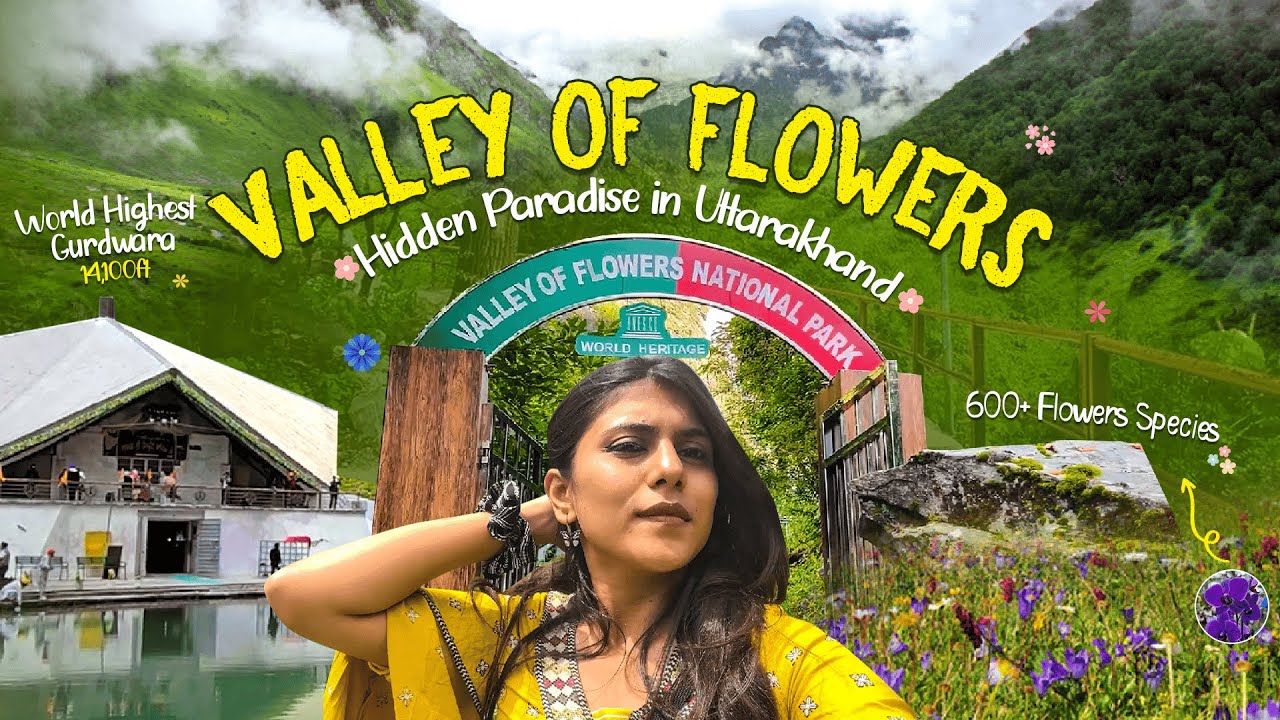
This National Park is located in the Chamoli district of Uttarakhand, where it is home to more than 600 species of flowers that come together to form a tapestry of colors—with shades of pink, blue, and purple—right in front of you.
Nestled at an altitude of approx 12,000ft, the area is also home to many endangered animals, including snow leopards and red foxes. Together, the Valley of Flowers National Park and the Nanda Devi National Park form a crucial transition zone between the mighty Himalayas and the Zanskar range of mountains.
The valley of flowers trek difficulty level comes under the easy to moderate category, and is considered to be a perfect trek for beginners and even a great trek for families.
The hardest climb is the one to Hemkund Sahib Gurudwara, which is the highest Gurudwara in the world and one of the most important pilgrimage sites in Uttarakhand. The valley itself stretches to a length of almost 10 kilometers, with colors of rainbows speckled across the patchwork of grass, compelling you to stop and look at them closely.
The scent of flora lingers in the air and is hard to miss as you keep traversing through the valley, walking on the narrow path that cuts across the flowers of valley beds to make way.
The best time to do the Valley of Flowers trek is in July and August when the blooming of flowers is at its peak. The prominent species of flowers that nature lovers find here are Brahmakamal, Blue Poppy, Cobra Lily, Anemone, Geranium, Marsh Marigold & Primula.
Also, the valley has to offer much more than flowers, there are waterfalls, glaciers, towering mountains, gushing rivers, and quaint villages, not to mention an abundance of peace.
In this Valley of Flowers trek itinerary, we start our journey with an 8-hour drive from Rishikesh to Joshimath, which is the base camp for the Valley of Flowers trek.
Though the drive can seem strenuous, the beautiful scenery that accompanies you provides you with a glimpse of the Panch Prayag, which are five holy sites of the confluence of the river Ganga, namely - Devprayag, Rudraprayag, Karnaprayag, and Nand Prayag, will surely make this drive a visual treat for your eyes. Upon reaching Joshimath, we will check into our lodgings and retire for the night.
The next day, we drive from Joshimath to Pulna village, which is the starting point for the Valley of Flowers trek. Upon reaching there, we start trekking to Ghangaria. We gradually ascend on a stretch of a 9-kilometer route with the Pushpawati river flowing alongside.
The trek is considered to be of the easy to moderate category, with the uphill route consisting of stone-carved paths and steep ascents testing your endurance slightly as you walk up to your next campsite, Ghangaria village, which is located at an altitude of 10,000ft.
The trail is lined with many small dhabas, so you will have plenty of resources to refill your water bottles and get snacks as you move forward. After walking for almost half of the distance, you will be able to see the Hathi Parvat ranges in front of you. From there on, the climb is steep, and you’ll be required to maintain proper footing until you reach your campsite.
The next day, you will be able to traverse through the valley of flowers. But before that, you have to cover at least a stretch of 4 kilometers of land. As you keep walking for at least 10 minutes, you will stumble upon the Laxman waterfall.
After a few minutes, you will reach the forest check post, from where you can buy tickets. The check post signifies your proximity to another marvel of nature in the form of a wooden bridge that is perched upon the Pushpavati River. No sooner after you have crossed the bridge, mountains will start peeking from behind.
Every direction that you take will seem like a natural paradise because all colors of the rainbow are now on the ground in the form of blooming flowers. The difficulty level of the Valley of Flowers trek becomes easier here as you have to walk flatly throughout the valley.
Adorning the Himalayan peaks with different hues belonging to native flowers like poppies, Himalayan roses, geraniums, etc. The flowery carpet will end after a 5-kilometer stretch at a glacier, but the sight of the majestic Himalayan peaks of Nilgiri Parvat, Bhyundar Khal, Rattan, Gauri Parvat, etc still makes the view picturesque with a cold stream of water flowing throughout.
Eating and camping in the valley aren’t allowed, so you will have to head back to Ghangaria and retire for the night.
Did you know? An English botanist, Joan Margaret Legge, inspired by Smythe, died collecting alpine flowers here? Her sister marked her grave at Khulia Garva, now a poignant stop for trekkers.
The hardest part of the Valley of Flowers trek commences the next day as you head out for Gurudwara Hemkund Sahib, nestled at an altitude of 14,107 ft, which is the highest Gurudwara in the world.
The six-hour-long trek from Ghangaria to Hemkund Sahib is challenging in more than one way, the first one being that in a matter of a few hours, you gain an altitude of 5,000ft, and the scenic views are replaced by steep descents, making the climb rather strenuous.
As you keep walking, you will be able to look over the entire valley of flowers, and soon a cascading waterfall will come into view. You’d be able to feel the low oxygen levels as you gradually ascend, and that is your cue to keep drinking water as much as you can.
After traversing on stone-paved pathways and stumbling upon melting glaciers, Gurudwara Hemkund Sahib will bless you with the Hemkund Lake right by its side, mirroring its pristine beauty. All your efforts will feel worth it once you have a cup of hot chai and a mouthful of khichdi that is distributed during the Langar.
As you stroll on the premises, you’d feel a sense of peace that you won’t find anywhere else. The lake, which is formed by the melting glaciers of Hathi Parvat and Saptarishi peaks, reflects the grandeur of the mountain as well.
When the skies are crystal clear, you get a view of the Saptarishis peaks beckoning you closer, while on the lakeside, rare flowers like the Brahma Kamal add more charm to the beauty of Hemkund Lake.
On a clear day, you will be able to glimpse at the Himalayan peaks of Nilgiri Parvat, Bhyundar Khal, and Gauri Parvat as well. A temple dedicated to Laxman, Lord Rama’s brother, is also situated near the lake, and you can pay your respects there as well.
You will soon have to descend, and the 7-kilometer walk can put a strain on your muscles. The next day is relatively easier as the descent to Pulna village would feel easier than the steep uphill climbing of the previous day. The trail is lined with enough dhabas and snack shops, making it even easier to descend, and in no time, you’d have reached the base from where we’d be driving to Joshimath, commencing our valley of flowers trek.
Being one of the most well-known treks in the Indian Himalayas, the Valley of Flowers trek is quite safe. It has well-laid trails frequented by pilgrims. However, one needs to be careful on the slippery sections of the trail, especially during the rainy season.
Perched beside a glacial lake and framed by seven towering peaks, Hemkund Sahib is where faith meets the Himalayas. Sikhs believe this is the very place where Guru Gobind Singh, the tenth Sikh Guru, meditated in a previous birth before attaining union with God.
In his scripture, Dasam Granth, he describes a serene spot called “Sapta Shring”, a lake embraced by seven mountains.
Inspired by these verses, Sikhs began searching for this mystical location in the late 19th century. After decades of effort, the first modest Gurudwara was built here in 1936. Over time, it evolved into the striking inverted-lotus structure seen today.
Devotees take a holy dip in Hemkund Lake, also known as Lokpal Lake. Adding to its spiritual aura, a nearby temple marks where Lakshman is believed to have meditated. This rare confluence makes Hemkund Sahib a revered pilgrimage for both Sikhs and Hindus.
This way, you see that from its discovery to the vibrant tapestry of alpine blooms, the Valley of Flowers offers a journey that transcends ordinary trekking. Every step through this Himalayan paradise brings a blend of adventure, serenity, and awe-inspiring beauty, culminating at the sacred heights of Hemkund Sahib.
So if you’re chasing nature’s beauty, a touch of spirituality, or just a moment to pause, the Valley of Flowers trek is a gentle reminder that the most unforgettable places are often the ones we find by chance.
Day
Day
Day
Day
Day
Day
Weekend
Getaways
18-38
Himalayan
Treks
18-48
Backpacking
Trips
18-40
Biking
Trips
18-45
Customized
Trips
No Limit


| Inclusions | Exclusions |
|---|---|
Accommodation: 2 Nights of Accommodation in a hotel/homestay in Joshimath, and 3 Nights of Accommodation in a hotel/homestay in Ghangaria on a Triple/Quad Sharing basis as per booking. Transportation: Surface transfer from Rishikesh to Rishikesh by Sumo / Tempo Traveler - Non A/c (Depends on the number of Participants). Meals: All Veg meals from Day 1st Dinner to Day 6th Morning Tea. Snacks: Morning / Evening Tea / Coffee with light snacks. Trek Leader: Qualified and Experienced Trek leader and support staff. The Trek Leader will join the group from Pandukeshwar to Pandukeshwar. However, they will be in touch with you from the start. Permits: All necessary fees and permits. Safety Equipment: Basic First Aid kit with Oximeter and Oxygen Cylinder. Guide ratio: 1:10 Others: Cloak Room facility available at base camp for extra luggage. | Meals during transit. Insurance of any kind. Any fees and permits (For Foreigners). Unscheduled delay due to a landslide. Charges for Hot water at Ghangaria (Rs 60 per bucket). Cost Escalation due to “Force Majeure and Evacuation charges”. Anything not mentioned explicitly in the above program. Note: You can apply for travel insurance prior to the trek. Bag offloading cost is Rs 1200 (maximum weight should not be more than 10 kg) |
| Upto 21 days | 20-15 days | 14-8 days | 7-0 days | |
|---|---|---|---|---|
| Batch Shifting | ||||
| Cancellation Charge | Free Cancellation | 25% of the Trip Amount | 50% of the Trip Amount | 100% of the Trip Amount |
| Booking Amount | Refunded in mode of Credit Note | Adjusted in Refund Deduction | Adjusted in Refund Deduction | No Refund |
| Remaining Amount | Full Refund (minus) booking amount | Refund (minus) 25% of the trip amount | Refund (minus) 50% of the trip amount | No Refund |
| Upto 21 days | 21-15 days | 14-08 days | 07-03 days | |
|---|---|---|---|---|
| Booking Amount | ||||
| 50% Payment | Optional | Compulsory | — | — |
| 75% Payment | Optional | Optional | Compulsory | — |
| 100% Payment | Optional | Optional | Optional | Compulsory |
Booking amount is non-refundable in cash and is adjusted per the cancellation policy above. Remaining balance must be paid as per the schedule for your batch date.
Located in the Garhwal Himalayas of Uttarakhand, the Valley of Flowers is a high-altitude national park renowned for its seasonal bloom of alpine flowers, expansive meadows, and dramatic Himalayan scenery. Recognised as a UNESCO World Heritage Site, the valley lies within the Nanda Devi Biosphere Reserve and is accessible only during a short window each year.
During the monsoon months, the valley transforms into a natural carpet of wildflowers set against snow-clad peaks, glacial streams, and mist-covered slopes. The trek to the valley is beginner-friendly and passes through forested trails, river crossings, and the settlement of Ghangaria, which serves as the base for exploration.
The region is known for its exceptional biodiversity, hosting hundreds of alpine plant species and supporting rare Himalayan wildlife. Due to its protected status, strict conservation rules are followed—camping and eating inside the valley are prohibited, helping preserve its fragile ecosystem. Ideal for nature lovers, photographers, and first-time trekkers, the Valley of Flowers offers a short yet deeply rewarding Himalayan experience.
Region: Uttarakhand, Garhwal Himalayas
Trek Duration: 5–6 Days
Maximum Altitude: ~14,100 ft (Hemkund Sahib)
Trek Difficulty: Easy to Moderate
Best Season: July to September
Starting Point: Pulna Village
Base Camp: Ghangaria
Permit Required: Yes (at forest check post)
Suitable For: Beginners, nature lovers, photographers, first-time trekkers
____________________________________________________________________________________
Reaching the Valley of Flowers involves a combination of air, rail, and road travel, followed by a short Himalayan trek. Most trekkers reach the Valley of Flowers via Joshimath and Govind Ghat, followed by a trek starting from Pulna village.
The nearest airport to the Valley of Flowers trek is Jolly Grant Airport in Dehradun, located approximately 290 km from Joshimath. From the airport, you can hire a taxi or take a bus to Rishikesh, which serves as the main transit hub for onward travel to Joshimath.
The closest railway stations are Haridwar Junction and Rishikesh Railway Station.
Both stations are well connected to major cities like Delhi, Mumbai, and Kolkata. From Haridwar or Rishikesh, travellers must continue by road towards Joshimath.
Joshimath is the main road-accessible town for the Valley of Flowers trek.
From Pulna, the trek proceeds to Ghangaria, the base camp for both Valley of Flowers and Hemkund Sahib.
____________________________________________________________________________________
The Valley of Flowers is accessible only for a limited period each year due to extreme Himalayan weather conditions. The trekking season usually runs from early July to early October, with each month offering a slightly different experience.
The best time to visit Valley of Flowers is from July to September, when the monsoon rains trigger a spectacular bloom of alpine flowers across the valley.
During this period, the meadows are at their most vibrant, waterfalls are active, and the landscape appears lush and colorful. This is also the peak season for photography and nature lovers.
June marks the opening of the Valley of Flowers after winter. While the floral bloom is still limited, trekkers can witness melting snow, clear trails, and fewer crowds. Higher sections may still have snow patches, offering a unique contrast of green meadows and white landscapes.
By late September, the flowers begin to fade, and the valley transitions into autumn hues. Skies are generally clearer, mountain views are sharper, and crowds reduce significantly. However, temperatures drop rapidly, and the valley closes soon after due to snowfall.
The Valley of Flowers remains closed from mid-October to late May due to heavy snowfall and unsafe trekking conditions. The entire region becomes inaccessible during winter.
____________________________________________________________________________________
The Valley of Flowers is a protected national park and one of the safest treks in the Indian Himalayas when undertaken responsibly. The trail is well-marked and frequently used by trekkers and pilgrims, especially during the peak season.
____________________________________________________________________________________
The Valley of Flowers offers far more than just a scenic trek. From alpine meadows and sacred sites to rare biodiversity, the region provides a rich mix of nature, spirituality, and soft adventure.
The primary highlight is trekking through the Valley of Flowers National Park, a UNESCO World Heritage Site known for its vibrant alpine meadows during the monsoon season. The well-marked trail passes through glaciers, waterfalls, and flower-covered slopes, making it ideal for beginners and nature lovers.
Situated beside Hemkund Sahib, Hemkund Lake (also known as Lokpal Lake) is a serene glacial lake reflecting the surrounding peaks. The calm atmosphere and pristine setting make it one of the most peaceful spots in the region.
The Valley of Flowers is a paradise for landscape and macro photography. Mist-covered mountains, flowing streams, and colorful flowers provide endless photography opportunities. Nature walks inside the valley allow visitors to observe the ecosystem at a slow, immersive pace.
While the core zone remains restricted, parts of the Nanda Devi Biosphere Reserve near the Valley of Flowers showcase untouched Himalayan landscapes and add ecological importance to the trek.
Ghangaria is the last inhabited village on the route and serves as the base camp for both Valley of Flowers and Hemkund Sahib. It offers basic accommodation, food options, and a chance to experience simple Himalayan mountain life.
Camping and eating are not allowed inside the valley, ensuring minimal human impact. Observing how conservation efforts protect this fragile ecosystem is an experience in itself for responsible travellers.
____________________________________________________________________________________
Choosing the right trek is easy, but selecting the right trekking company is the real challenge—especially when venturing into the remote areas of the Himalayas. The experience and credibility of a trekking organization are crucial factors you need to consider.
We understand these concerns, and that’s why we want to show you why JustWravel is your ideal trekking partner for the Valley of Flowers Trek.
Put on your Shark Tank sunglasses, because after our pitch, you'll be eager to pack your bags for the Valley of Flowers!
Don’t be a Crap Bag You are in nature’s lap Kindly take that garbage back
If you’re wondering what our "Keep the Trails Alive" campaign is all about, it’s simple: without proper management, many sacred mountains face the threat of over-tourism. As responsible trekkers, we won’t let that happen.
If you’re trekking to Valley of Flower with JustWravel, you ensure that everything you carry in, you carry out. We leave nothing behind except our love and a piece of our hearts.
Trekking at a Valley of Flowers altitude of 14,200 ft requires specific standards. Here is how we manage the ground reality:
Acclimatization is the critical process of letting your body adjust to lower oxygen levels. We follow a gradual ascent (300-500 meters per day above 3,000m) and incorporate rest days. Staying hydrated (3-4 liters daily) and a carbohydrate-rich diet are essential to prevent altitude sickness.
Mountain weather is unpredictable. Whether it’s a sudden storm or an emergency, we always have contingency plans. Our experienced guides use their deep understanding of the mountains to assess conditions effectively, ensuring you remain safe and comfortable no matter what challenges arise.
Connect with us
Company
Group Tours
© 2015-2026 JustWravel Pvt. Ltd.


