

Spiti is a starkly beautiful cold desert mountain valley known for ancient monasteries, breathtaking landscapes, and resilient communities. While destinations like Ki Gompa and Tabo Monastery often steal the limelight, hidden gems offer equally profound experiences. One such treasure is the Kungri Monastery, which is located in the Pin Valley, a stunning side valley of the larger Spiti Valley in the Lahaul and Spiti district of Himachal Pradesh.
Kungri Gompa is situated at an altitude of approximately 3,500 meters (around 11,480 feet) above sea level. It’s not situated dramatically on a clifftop like some other monasteries in the region, but rather spread out on a relatively gentle slope, making it quite accessible once you are in the valley. The approach to the monastery along the Pin Valley road is an adventure in itself, offering glimpses of the raw, untamed beauty of the region. You’ll cross sturdy bridges over the gushing Pin River, navigate winding roads, and pass through small, picturesque hamlets. The air here is thin and crisp, and the silence is profound, broken only by the sound of the wind or the distant call of a bird.
History of Kungri Monastery
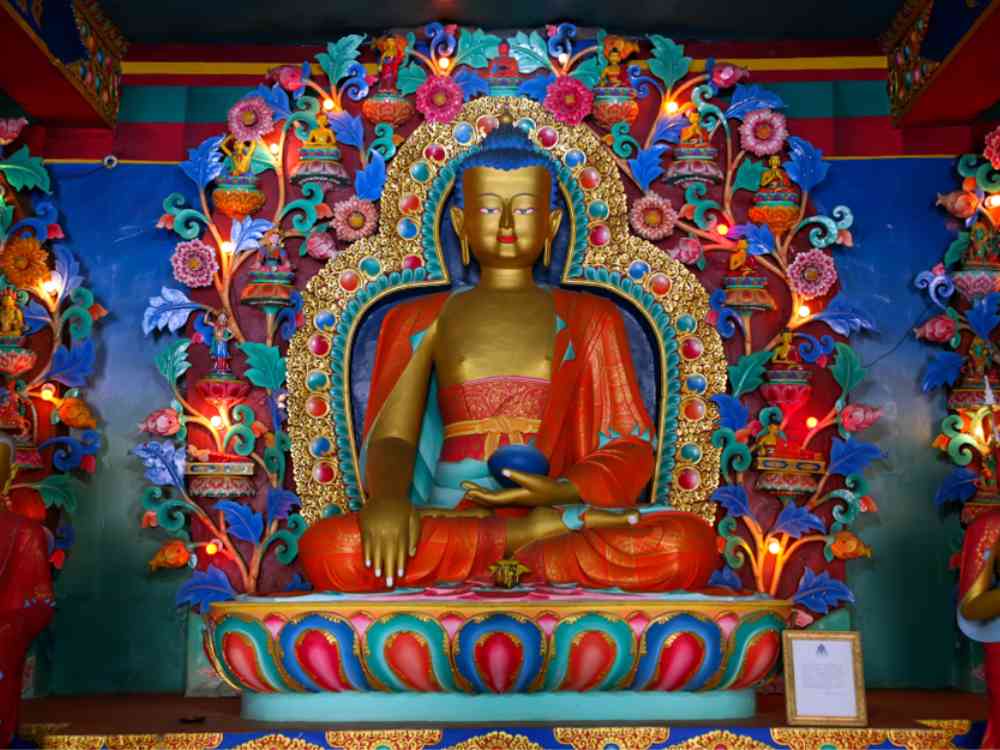
Kungri Monastery holds a significant place in the Buddhist heritage of Spiti Valley, primarily because it is one of the oldest monasteries in the region and the main Nyingmapa order monastery in Spiti. The Nyingma school is the oldest of the four major schools of Tibetan Buddhism, often referred to as the “ancient ones” or “old school,” founded by the Indian master Guru Padmasambhava (Guru Rinpoche) in the 8th century.
While precise early records can be scarce for such ancient establishments, historical accounts and local traditions suggest that the Kungri Monastery was founded in the early 14th century, around 1330 AD. Its establishment is attributed to the efforts of Nyingmapa lamas spreading their teachings in these remote Himalayan valleys. Unlike the Gelugpa order (to which prominent monasteries like Ki Gompa Monastery, Tabo, and Dhankar now largely belong, though Tabo has complex historical layers), Kungri has maintained its Nyingma affiliation throughout its history. This makes it a unique center for Nyingma teachings and practices in Spiti.
Over the centuries, Kungri Gompa has withstood the harsh climate, political changes in the region, and the challenges of its remote location. It has served as a spiritual sanctuary and a center for community life for the people of Pin Valley. The lamas of Kungri have played an essential role in providing spiritual guidance, education, and performing religious ceremonies for the local populace. In recent times, there have been efforts to renovate and expand parts of the monastery to accommodate the growing number of monks and to preserve its ancient heritage.
A visit to Kungri Monastery is therefore not just about seeing an old building; it’s about connecting with a lineage of Buddhist practice that traces its roots back to the earliest days of Buddhism in Tibet and the Himalayas.
Best Time to Visit Kungri Monastery
Choosing the best time to visit Kungri Monastery largely depends on what you seek from your Spiti journey and your tolerance for cold.

| Summer (June to September) | Shoulder Seasons (May and October) | Winter (November to April) |
| Weather: Daytime temperatures are pleasant, ranging from 15°C to 25°C. Nights can still be chilly, dropping to 5-10°C, so warm layers are essential. The sun is strong during the day due to the high altitude. | The snow begins to melt in May, & roads start opening up, though there can be delays. October marks the onset of winter with temperatures often dropping below freezing at night. | Temperatures plummet, often staying well below freezing even during the day, with night temperatures reaching -20°C to -30°C or even lower. Heavy snowfall is common. |
| Accessibility: All roads to Spiti, including Kunzum Pass (connecting Lahaul and Spiti), are generally open during these months. The Pin Valley road to Kungri is also accessible. | Kunzum passes might be open in May and usually remain open until mid-October, but this is subject to weather conditions. The Shimla-Kinnaur route to Spiti is generally open for a longer period. | The Manali-Kaza road (via Kunzum) is completely closed. The Shimla-Kinnaur road might also face temporary closures due to snow. Reaching there can be extremely challenging. |
| Landscape: You’ll see some greenery along the Pin River, & the snow on higher peaks creates a stunning contrast with the brown mountains. | May can still have significant snow, while October brings autumnal hues to the limited foliage and a stark, pre-winter beauty. | While incredibly harsh, winter offers a unique, starkly beautiful landscape, and you’d experience Spiti in winter in its most raw and isolated state. |
Festivals at Kungri Gompa

Kungri Monastery is known for its annual Cham dance (mask dance) festival, which usually takes place in July. This can be a vibrant and culturally rich time to visit, offering a deeper insight into the Nyingmapa traditions. However, dates can vary, so it’s best to confirm locally if you plan your trip around it. For most travelers, the summer months provide the best balance of pleasant weather, accessibility, and the opportunity to fully explore Kungri and the Pin Valley.
How to Reach Kungri Monastery
Reaching Kungri Monastery involves a journey into the remote Pin Valley, which itself is a part of the larger Spiti Valley. The route you take will depend on your starting point and the time of year.

Getting to Spiti Valley: There are two primary road routes to enter Spiti Valley:
Via Manali (Shorter, Higher Altitude, Seasonal)
- Route: Manali – Atal Tunnel – Gramphu – Batal – Kunzum Pass (4,551m) – Losar – Kaza.
- Distance: Approximately 200-220 km from Manali to Kaza.
- Time: Takes at least 12 hours of driving, often broken with an overnight stay in Kaza.
- Accessibility: This route is typically open from late May/early June to mid-October, depending on snowfall at Rohtang and Kunzum passes. The Atal Tunnel bypasses Rohtang Pass, making access to Lahaul easier, but Kunzum Pass remains the seasonal gateway to Spiti from this side.
- Considerations: Involves crossing high mountain passes quickly, so acclimatization is crucial to avoid altitude sickness. The road conditions can be challenging, especially between Gramphu and Kaza
Via Shimla and Kinnaur (Longer, Lower Altitude Gain, More All-Weather):
- Route: Shimla – Narkanda – Rampur – Reckong Peo – Pooh – Nako – Tabo – Kaza.
- Distance: Approximately 420-450 km from Shimla to Kaza.
- Time: Takes 2-3 days of driving, with recommended night halts in places like Sarahan, Sangla/Kalpa, or Nako/Tabo for acclimatization and sightseeing.
- Accessibility: This route is open for a longer duration, often accessible even in early winter (though heavy snow can cause temporary closures). It offers a more gradual ascent, aiding in acclimatization.
- Considerations: The journey is longer, but the roads are generally better maintained, especially up to Reckong Peo. It passes through the beautiful Kinnaur district.
From Kaza to Kungri Monastery: Once you reach Kaza, the sub-divisional headquarters of Spiti, Kungri Monastery in Pin Valley is relatively close.
- Route: Kaza – Attargu (bridge where the Pin Valley road diverts) – Gulling – Kungri.
- Distance: Approximately 38 km from Kaza to Kungri.
- Time: Takes about 1.5 to 2 hours by vehicle.
- Transport Options:
- Himachal Road Transport Corporation: There are infrequent local buses that ply from Kaza into Pin Valley, often going up to Mud village (the last motorable village).
- Shared Taxis: Shared taxis are a common mode of transport in Spiti. You might find some heading towards Pin Valley from Kaza, especially in the morning.
- Private Hire Taxi: This is the most convenient but also the most expensive option. You can hire a taxi from Kaza taxi union for a day trip to Pin Valley, including Kungri Monastery, or for a drop.
Note: Regardless of the route, ensure your vehicle is in good condition and the driver is experienced in mountain driving. Carry essentials like water, snacks, warm clothing, and a first-aid kit. Mobile connectivity is sparse in Pin Valley, so inform someone of your plans.
Why You Must Stop at Kungri

For many travelers embarking on the classic Spiti Valley circuit, the journey often focuses on the main highway connecting Kaza, Tabo, Dhankar, and Ki Gompa Monastery. Pin Valley, and by extension Kungri Monastery, lies a short detour off this primary route, branching off near Attargu. While it might seem like an “extra” stop, there are compelling reasons why dedicating time to visit Kungri Gompa and its surrounding valley is an enriching addition to any Spiti itinerary.
Kungri Monastery offers a unique window into the Nyingmapa school of Tibetan Buddhism. Most of the prominent and larger monasteries in Spiti, such as Ki, Tabo (in its current dominant practice), and Dhankar, belong to the Gelugpa order. Visiting Kungri provides a valuable opportunity to experience and understand the practices, iconography, and architectural nuances of the Nyingma tradition, the oldest Tibetan Buddhist school.
You’ll notice differences in the deities depicted, the style of thangkas, and perhaps even the atmosphere within the prayer halls. You can often explore its prayer halls and courtyards at your own pace, interact with the resident monks (if they are available and willing), and soak in the peaceful atmosphere without the hustle and bustle found at more tourist-frequented sites.
Explore the best Spiti tour packages with JustWravel.
Kungri Monastery FAQs
Kungri Monastery, also reverently known as Kungri Gompa, is one of the oldest and most significant Buddhist monasteries in Spiti, Himachal Pradesh. It is situated in the breathtakingly beautiful Pin Valley, a side valley of the main Spiti Valley. You’ll find Kungri nestled amidst the stunning, stark landscapes characteristic of this trans-Himalayan region.
Reaching Kungri Monastery from Kaza (often referred to as the Pin Valley Kaza access point) involves a scenic drive of about 30-35 kilometers. You can hire local taxis or check for infrequent bus services.
Kungri Monastery offers a distinct spiritual experience compared to other famous Spiti sites such as the Ki Gompa Monastery. The primary difference lies in their monastic order: Kungri is a Nyingma gompa monastery (the oldest school of Tibetan Buddhism), while Ki Gompa Monastery (and many others in Spiti) largely follows the Gelug school. This results in variations in teachings, practices, iconography, and the overall atmosphere at Kungri Gompa.
Including Kungri in your itinerary for Pin Valley is highly recommended for several reasons. It provides a unique insight into the ancient Buddhist traditions, often less crowded than more prominent sites, allowing for a more peaceful experience. The journey to Kungri itself, via the Pin Valley road from the Pin Valley Kaza direction, offers spectacular views.


