

The Kashmir Great Lakes trek is frequently misunderstood by trekkers who are captivated by photos of pristine alpine lakes, endless flower-filled meadows, and dreamy Himalayan landscapes. But beyond its perfect beauty lies a physically demanding journey that tests your endurance, stamina, and ability to adapt to high altitude. Understanding the Kashmir Great Lakes trek difficulty level before you begin is essential for a safe and enjoyable experience.
This is not a leisurely walk through Kashmir’s valleys. Long trekking distances, steep mountain passes above 13,000 ft, and rapid altitude gain make KGL a moderate to difficult Himalayan trek. While the scenery feels magical at every turn, the trail demands preparation, fitness, and mental resilience to truly enjoy everything this legendary trek has to offer.
So keep reading until you find the answer!
Quick Overview: Kashmir Great Lakes Trek at a Glance
| Trek Detail | Information |
| Duration | 7 Days |
| Total Distance | 70-74 km |
| Maximum Altitude | 13,750 ft |
| Difficulty level | Moderate-Difficult |
| Best Time | July- Mid-September |
| Starting Point | Sonmarg |
| Ending Point | Naranag |
Is the Kashmir Great Lakes Trek Really Difficult?

The Kashmir Great Lakes Trek (KGL) is rated moderate to difficult, and that rating is well-earned. The alpine lakes, wildflower meadows, and mirror-still reflections create a deceptively soft visual impression. The terrain, however, is demanding.
Three factors make this trek genuinely challenging:
- Long daily trekking distances (10–16 km/day)
- Three high-altitude passes crossed in quick succession
- Rapid altitude gain that increases AMS risk
Let’s break each one down.
Daily Distance and Terrain
The trek covers 70–74 km over 7 days, with most days lasting 6–8 hours of active walking. Trail conditions include:
- Rocky and uneven mountain terrain
- Glacier crossings
- Sharp, sustained ascents
- Long technical descents
- High-altitude meadows with soft, unstable ground
A 12 km day in the Himalayas is nothing like a 12 km walk in the city. Reduced oxygen, uneven footing, and cumulative fatigue across days all add up. The hardest part for most trekkers isn’t any single climb; it’s the sustained effort over multiple consecutive days.
Three High-Altitude Mountain Passes
Most beginner-friendly Himalayan treks cross one pass. The KGL crosses three in rapid succession.
| Pass | Approximate Altitude |
| Nichnai Pass | 13,100 ft |
| Gadsar Pass | 13,750 ft |
| Zaj Pass | 13,000 ft |
Each pass involves an ascent of 2,000–3,000 ft, followed by a steep descent. The climb to Gadsar Pass is widely considered the most physically draining section, long, exposed, and relentless, especially if the weather turns.
The payoff: snow-capped ridges, surreal turquoise lakes, and Himalayan vistas that make every hard step worth it.
Rapid Altitude Gain and AMS Risk
By Day 2, most trekkers are sleeping above 11,000 ft (3,353 m). That’s a fast ascent.
Acute Mountain Sickness (AMS) can affect even highly fit trekkers. Watch for:
- Persistent headaches
- Breathlessness at rest
- Nausea or dizziness
- Unusual fatigue
- Poor sleep quality
Unlike longer Himalayan expeditions, KGL has minimal built-in acclimatization time. To reduce your risk:
- Arrive early: Spend at least one extra day in Srinagar or Sonmarg before the trek starts.
- Hydrate constantly: Aim for 3–4 litres of water daily on the trail.
- Pace yourself: Trek slowly on ascent days — your ego can rest; your lungs cannot.
- Never ignore symptoms: Descent if AMS worsens. No viewpoint is worth a medical emergency.
Is the Kashmir Great Lakes Trek Good for Beginners?

Yes, for the right kind of beginner.
KGL is sometimes called a “fit beginner trek,” which means no technical mountaineering skills are required. But it absolutely demands solid cardio endurance, physical stamina, and mental resilience.
Good fit for:
- Active hikers and runners with consistent training
- First-time high-altitude trekkers who have prepared for 8–10 weeks
- Experienced trekkers seeking a scenic, non-technical Himalayan route
May struggle:
- Sedentary individuals without prior fitness training
- People with knee problems or poor cardiovascular health
- Trekkers who have never been above 8,000 ft
The scenery is so beautiful that it’s easy to underestimate the preparation required. Don’t let the Instagram reels fool you.
How to Prepare: Training Plan and Fitness Benchmarks
Start training 8–10 weeks before departure. Target these fitness benchmarks before you leave:
| Fitness Goal | Target |
| Running | 5 km in under 32 minutes |
| Walking/Jogging | 10 km comfortably |
| Stair Climbing | 30-40 minutes without stopping |
| Loaded Walks | Comfortable with a 5-6 kg pack |
Recommended Exercises
Cardio endurance: Running, brisk walking, cycling
Leg strength: Squats, lunges, step-ups, stair climbing
Core stability: Planks, dead bugs, mountain climbers
Mobility: Hip flexor stretches, ankle circles, IT band work
Strong knees and ankles are especially important during the steep descents from Gadsar and Zaj Passes — these sections are harder on the joints than the climbs.
Day-by-Day Difficulty Breakdown

Toughest Day: Day 4, Vishansar to Gadsar via Gadsar Pass
Most trekkers rate this as the hardest day on the entire route. Reasons:
- Longest sustained ascent of the trek
- Highest pass crossing (13,750 ft)
- Full-body fatigue has already accumulated from prior days
- The weather can shift rapidly at this elevation
But it’s also the most visually stunning day. You’ll pass Vishansar Lake, Krishansar Lake, Yamsar Lake, and arrive at Gadsar Lake, four alpine lakes in a single day. It’s a moving Himalayan postcard.
Best Time to Do the Kashmir Great Lakes Trek

The trek is open from July to mid-September. Here’s what to expect each month:
July: Snow patches still present on passes. Meadows are turning green. Wildflowers begin to bloom.
August: Peak greenery and flowers. Vibrant valleys. Pleasant daytime temperatures (12–18°C).
September: Crisp, clear skies. Fewer crowds. Stunning lake reflections. Best photography conditions.
Kashmir sits behind the Pir Panjal range, which shields it from the heaviest monsoon rainfall, making it one of the few Himalayan regions accessible during the summer monsoon. That said, always pack:
- Waterproof jacket and rain cover
- Quick-dry base layers
- Warm insulation layer for nights (temperatures can drop to -5°C)
Suggested Read: Kashmir Great Lakes Trek: A Complete Guide.
Essential Trek Information
| Factor | Details |
| Mobile Network | Mostly unavailable on the trail |
| Accomodation | Campsites only (no guesthouse) |
| Temperature Range | 15°C (day) to -5°C (night) |
| Trek Style | Point-to-point (Sonmarg to Naranag) |
| Inner Line Permit | Required |
| Water source | Glacial-fed streams throughout |
| Key fitnessType | Cardiovascular endurance |
Why the Kashmir Great Lakes Trek Is Worth Every Hard Step

Despite the difficulty, the KGL consistently ranks as one of India’s most rewarding Himalayan treks. No other trail in the country offers:
- Six alpine lakes in one continuous route (Vishansar, Krishansar, Yamsar, Gadsar, Satsar, Gangabal)
- Vast wildflower meadows across multiple valleys
- Three dramatic high-altitude passes
- Remote campsites untouched by crowds
- The iconic reflection of Harmukh Mountain in Gangabal Lake at dusk
Every day brings a completely different landscape. That variety, combined with the sense of genuine achievement, is what makes KGL unforgettable.
Should You Do the Kashmir Great Lakes Trek?
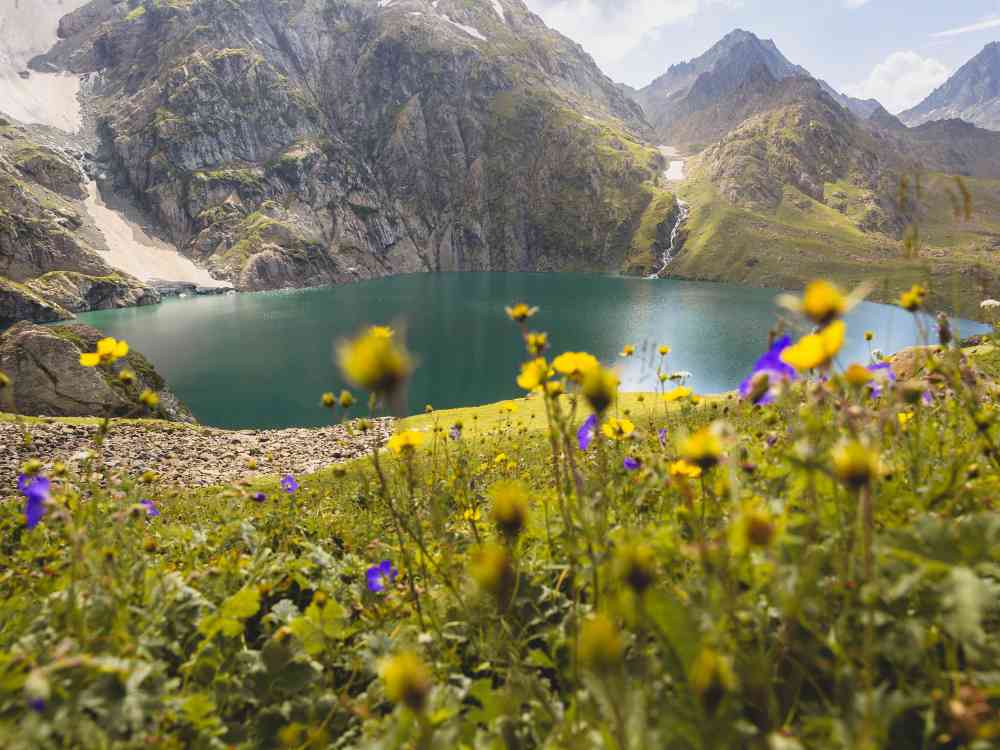
The Kashmir Great Lakes Trek is challenging but achievable with the right preparation. It demands cardio fitness, mental toughness, and basic high-altitude awareness, but no technical climbing skills.
If you put in the training, pace yourself on the trail, and respect the altitude, the difficulty stops being an obstacle and becomes part of the experience itself.
Because the best Himalayan journeys are never the easiest ones. And the trails that challenge you the most are often the ones you remember for the rest of your life.
Book your Kashmir Great Lakes Trek with JustWravel NOW!
Frequently Asked Questions
The Kashmir Great Lakes (KGL) trek is officially rated as moderate to difficult. While a determined beginner can complete it.
Daily distances range from 10 to 16 km, averaging around 6–8 hours of trekking.
Gadsar Pass at 13,750 ft (4,191 m) is the highest point on the route.
Yes, for fit and well-prepared beginners. Prior high-altitude experience is not required, but 8–10 weeks of cardio training is essential.
September is widely considered the best month, with clear skies, fewer crowds, and spectacular lake reflections.


