Bhutan, a Himalayan paradise, is home to a multitude of sacred monasteries that rise gently from the sun-kissed peaks, valleys, and forested ridges. These monasteries are not measured by their size or ornamentation; they exist to protect and safeguard Buddhist values and beliefs. These are not just monuments from the past; they are the anchors of the present.
One such deeply revered site at a higher altitude is the Gangtey Monastery, also known as Gangtey Gompa, which most powerfully embodies the rhythm of nature and Buddhist thought. Reflecting Bhutanese serenity at its finest, it’s time we learn more about this sacred monastery and plan a meaningful journey with JustWravel.
Your Detailed Guide on Gangtey Monastery in Bhutan
Gangtey Monastery is located in the Gangtey Valley, Bhutan, where there is absolute peace, contentment, and a rare sense of balance between nature, faith, and everyday life. Keep reading to know more.
Gangtey Monastery History

Gangtey Monastery is deeply ingrained in Bhutan’s spiritual history; in fact, this sacred place embodies the very essence of the country. This monastery is one of the oldest and most highly sacred Buddhist monasteries in Bhutan.
This place is shaped not by conquest or power, but by lineage, faith, and quiet continuity. If you go deeper into the history of Gangtey Gompa, you choose to understand how Bhutan chose preservation over change, depth over display, and meaning over magnificence.
Now, regarding the history of the revered Gangtey Monastery, it was founded in the 17th century by Gyalse Pema Thinley, the grandson and spiritual heir of Pema Lingpa, one of the most revered saints in Bhutanese history. Lingpa was not only a spiritual figure, but also imposed a strong cultural force because he was considered a terton, one who reveals the hidden treasures of Buddhism. Moreover, Lingpa’s teachings shaped the Nyingma school of Buddhism in Bhutan and left a lasting imprint on the country’s spiritual identity. Gangtey Monastery emerged as a physical continuation of this sacred legacy.
The monastery is still believed to be a stronghold of the Nyingma lineage, uniquely positioning it as Bhutan’s religious landscape. Gangtey Monastery has been the heart of the region, both spiritually & administratively, for centuries now.
The Gangtey Tulku, the reincarnated spiritual head of the monastery, played a vital role in shepherding the local community’s spiritual life. Day-to-day operations of the monastery included overseeing rituals, festivals, monks’ education, and community standards.
In a time when centralised rule in Bhutan was weak, institutions like Gangtey Gompa helped keep things running smoothly, provided a steady moral compass, and ensured some level of continuity.
In essence, the monastery’s notable history was not shaped by any series of dramatic events or sudden transformations; it was rather entirely defined by endurance. It has strongly withstood a multitude of external impacts like political changes, social shifts, and modern pressures, but chose to stand tall without losing its essence.
Your complete Bhutan Tour Package awaits. BOOK NOW!
Gangtey Monastery: Architecture & Location

The architecture of Gangtey Monastery tells its own story. Built in the traditional Bhutanese style with a large central courtyard surrounded by monks’ quarters, prayer halls & offices, it embodies the Buddhist concept of mindfulness. The design is inward-focused, reinforcing the idea that we should be introspective, not showy. Over time, the Monastery grew gradually, responding to the needs of the growing monastic community rather than any desire to make a grand statement.
Now, regarding the monastery’s location, it was deliberate and carried deep symbolic meaning. The Gangtey Monastery is located in the scenic Phobjikha Valley of Bhutan, sitting at an altitude of over 3,000 meters. It’s a bowl-shaped valley surrounded by tall mountains and pine forests, boasting striking stillness and peace. This exact place was thought out to be perfect for establishing a monastery, as no other noise exists here, making it an excellent place for contemplation.
Over time, the monastery became the central spiritual institution of the region, and villages slowly grew around it, rather than the other way around. This reversal itself speaks volumes about Bhutanese priorities.
Gangtey Monastery is also known as the Phobjikha Monastery because of its location and is deeply revered by the locals for its distinctive winter aspect. Every year, as soon as winter arrives, Phobjikha Valley welcomes a multitude of Black-Necked Cranes, which stay here through the season. It is believed, and often quietly observed by locals, that before settling into the valley, these majestic avian visitors circle the Gangtey Monastery three times, as if paying homage, before descending to the wetlands below. This entire phenomenon further enhances the monastery’s reverence and popularity.
Gangtey Monastery Travel Timings

If you are planning to visit Gangtey monastery, then knowing the timing details is a must for a seamless experience. To understand when to visit Gangtey Gompa is to realize that it is not a tourist attraction in the usual sense, but a living spiritual institution where time moves slowly and with purpose.
Here are the Gangtey Monastery travel timings for tourists:
The Gangtey Gompa Bhutan opens daily for visitors from 9:00 AM to 4:00 PM. This time window is enough for the tourists to explore the entire monastery at a relaxed pace. The tourists can discover and walk through outer courtyards, observe the architecture, and sit quietly within designated areas without disturbing the monks’ routine.
It’s important to note that the early morning and evening hours in the monastery are solely dedicated to prayers, monastic duties, and study. Avoid visiting around this time as the access may be limited. It’s best to plan your visit between 10:00 AM and 1:00 PM for the best experience.
Moreover, late afternoon visits, especially after 3:00 PM, carry a different mood, which is quieter, softer, and more introspective. If you choose this time, then it’s essential to be mindful that monks begin preparing for evening rituals.
There’s also a seasonal influence on the timings of visiting the Gangtey Gompa in Bhutan. Let’s understand season-wise monastery timings:
- The time period from October to March, the time period directly coincides with the arrival of the Black-Necked Cranes in Phobjikha Valley. The visiting experience will be much quieter, with limited access at a few points to protect birds and rituals, and respect for restricted zones, particularly in the early mornings.
- The time periods from April to June offer longer daytime hours and clearer roads, allowing more flexibility in visiting times. It’s a great time to visit the monastery, which will provide full access and a less-hurried experience.
- The period from July to September is a less preferred time as it marks the monsoon season in the country. Fog and rain may reduce visibility, and reaching the monastery earlier in the day is often advisable.
Adventure lovers can also explore Gangtey Monastery on two wheels. Read our complete Bhutan Bike Trip Guide: Routes, Best Time & Travel Tips.
Gangtey Monastery Travel Guide: What to Keep in Mind

Here are some special travel tips for visiting Gangtey Gompa in Bhutan for a hassle-free experience.
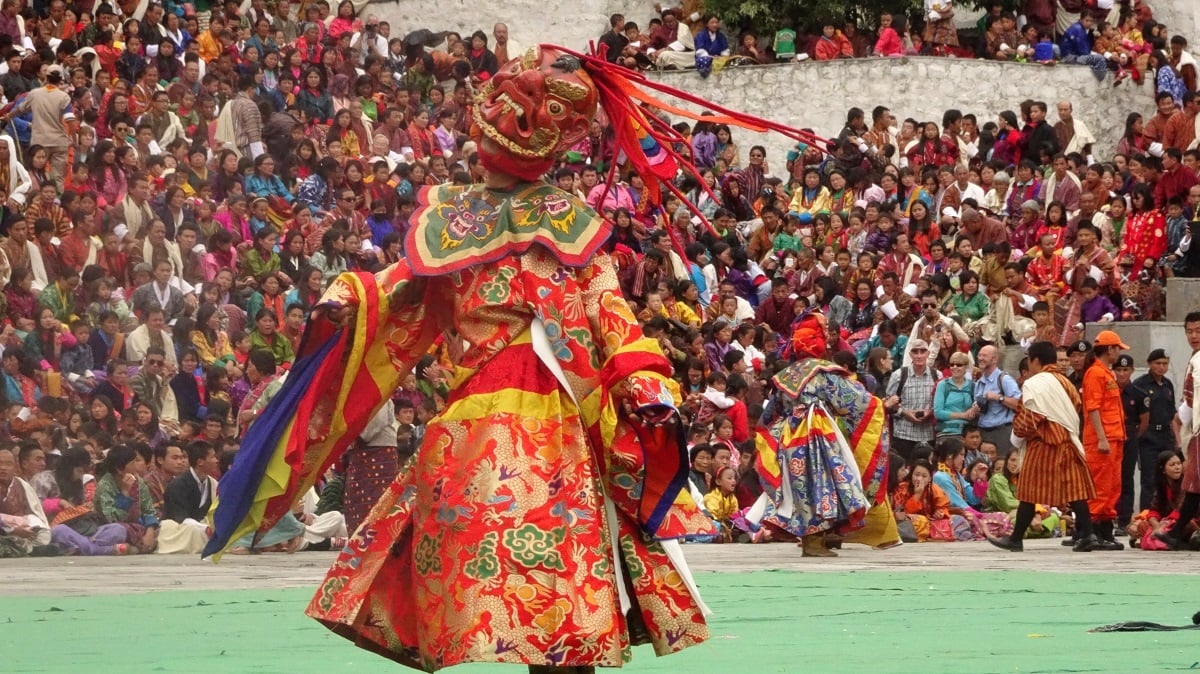
- If you plan to visit Bhutan during the festive time, especially when the Gangtey Tsechu (annual religious festival) is held, then regular visiting timings do not apply. The days before, during, and after this festive period are considered deeply spiritual and community-oriented, where the monastery remains open all day long. This is an excellent time to plan your visit to the monastery to witness Bhutan’s cultural and spiritual side up close.
- Visiting the monastery during the festive time requires following local etiquette, avoiding obstructing rituals, and remaining in designated viewing areas.
- Inside the monastery, there are certain inner prayer halls and monastic quarters that are not open for tourists. During important rituals or special prayer sessions, monks may temporarily restrict access to maintain sanctity. And respecting this decision is a must for the tourists!
- Plan your visit early during the daytime hours (Late morning from 10:00 AM to 1:00 PM) for an enriching, more flexible experience. Fog often rolls in by late afternoon, and roads leading to Phobjikha can become less predictable.
- Silence should be strictly practised when visiting the Gangtey Gompa, Bhutan. It’s mandatory to keep your phones silent, avoid loud conversations, and any kind of music.
- Walk clockwise when visiting chortens and prayer wheels inside the monastery. Also, avoid touching any kind of sacred object, including statues, scriptures, murals, and ritual items.
- Ensure a respectful behavior towards monks, seek permission before clicking their pictures, and if you are approached by any monk in the monastery, respond politely and briefly.
- During your visit to Gangtey Monastery, try not to interrupt prayers or studies.
- The monastery sits at a high altitude. To ensure a hassle-free experience, try to stay hydrated, walk slowly, and avoid exertion immediately after arrival.
IMPORTANT: Leave no carbon footprint. Phobjikha Valley is a protected wetland. Do not litter, stray off paths, or disturb wildlife, especially the Black-Necked Cranes.
Visiting Gangtey Monastery will not just be a simple spiritual experience; it will unfold into a quiet awakening. It will be an experience that stays with you long after the valley fades from view, teaching you that stillness, when embraced fully, can be as transformative as the grandest journey of your lifetime.
Then, what keeps you waiting further? Book our exclusive Bhutan Tour Package today and let our experts personalise it to your desires, ensuring the most memorable getaway! BOOK NOW!
Frequently Asked Questions
The Gangtey Gompa in Bhutan is considered special as it is the main seat of the ancient Nyingma school in western Bhutan and stands as the spiritual heart of Phobjikha Valley.
The best time to visit the Gangtey Monastery is between October and March, when the weather is perfect for visiting the Phobjikha Valley. Tourists will also get a chance to spot the Black-Necked Cranes and the festivities.
Bhutan is home to thousands of monasteries, out of which 20 to 30 are regarded as major monasteries and dzongs, which remain regularly open for tourists.
No, there aren’t any ATMs or cafes near the Gangtey monastery. It’s best to carry cash and other essentials beforehand.
Yes, photography is allowed only in the monastery’s outer courtyards and open areas. Photographing inside the prayer halls is not allowed. Do seek permission before clicking pictures of the monks.