


Key Monastery, also known as Ki Monastery or Kye Monastery, stands as a prominent Buddhist monastery nestled within the dramatic landscapes of the Spiti Valley in Himachal Pradesh, India. Perched majestically at an altitude of approximately 4,166 meters (13,668 feet) above sea level, it holds significant importance as a vibrant center for learning and spiritual training for Lamas. Its strategic location atop a hill offers awe-inspiring panoramic views of the meandering Spiti River and the rugged Himalayan terrain that embraces it. Beyond its visual grandeur, the monastery serves as a vital religious institution for the devout local Buddhist community and is a cornerstone attraction for all who venture into this remote and captivating region.
The origins of Key Monastery trace back to the 11th century, founded by Dromtön, a revered student of the renowned Buddhist master Atisha. Its historical lineage is deeply intertwined with Tibetan Buddhism, specifically adhering to the principles and practices of the Gelugpa (Yellow Hat) sect, one of the newer schools of Tibetan Buddhism. Over the centuries, Key Monastery has endured a tumultuous history, facing numerous challenges. It has been subjected to repeated invasions by various armies, most notably by the Mongols in the 17th century, who sought to expand their influence.
Dive Deep into Key Monastery
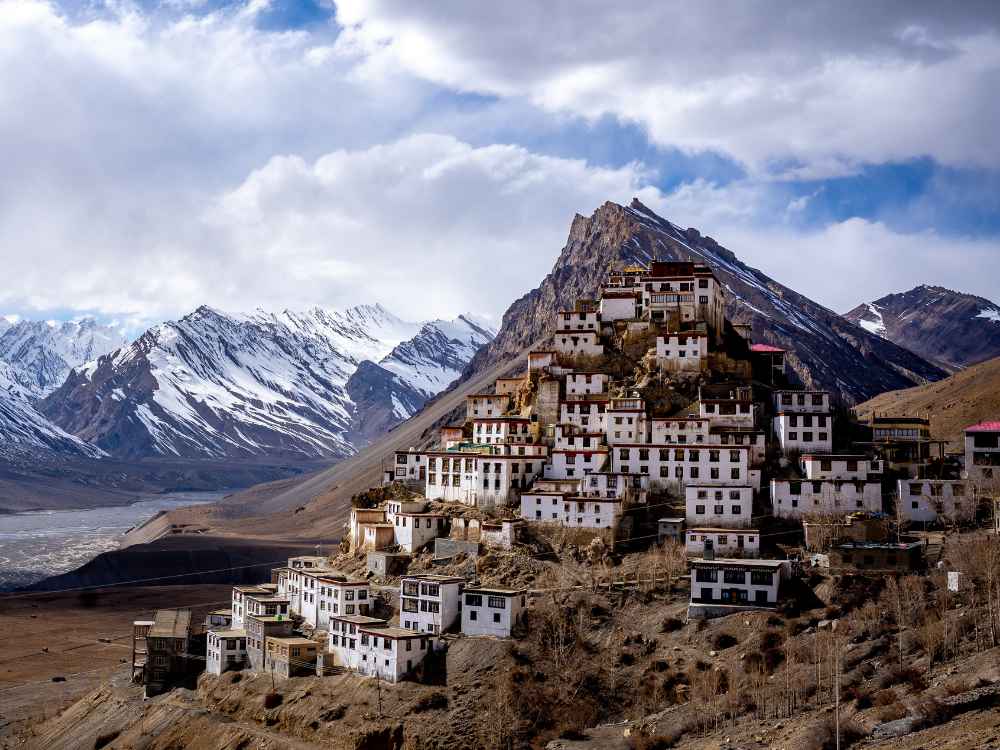
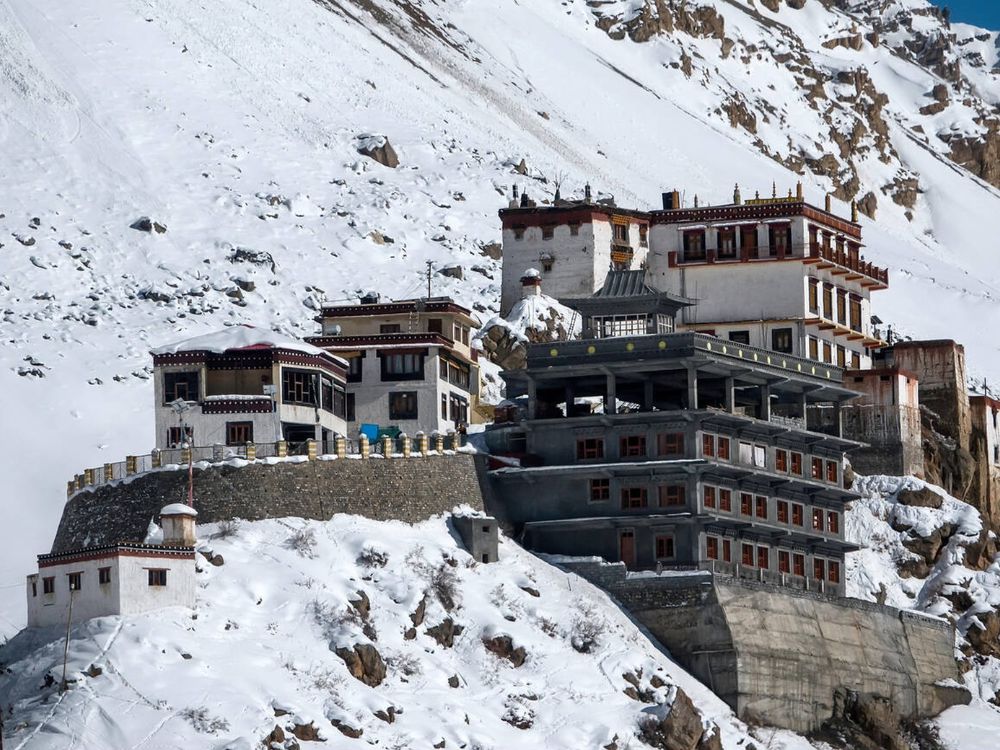
The architecture of Key Monastery is a striking example of its dual function: a monastic complex dedicated to spiritual pursuit and a formidable defensive fort designed for protection. Its structure is distinctly fortress-like, characterized by an irregular and organic layout where buildings appear to be stacked one upon the other, following the contours of the hill. The monastery typically spans three main floors, forming a complex labyrinth of narrow, winding corridors, low-ceilinged rooms, and multiple prayer halls.
Within these ancient walls, intricate murals and vibrant frescoes adorn the surfaces, depicting a rich tapestry of Buddhist deities, mythical creatures, and significant scenes from Buddhist mythology. These artworks not only serve as decorative elements but also convey profound spiritual narratives. Beyond the visual splendor, the monastery safeguards a priceless collection of ancient manuscripts, some dating back hundreds of years, offering invaluable insights into Buddhist philosophy and history. Alongside these texts are thangkas, intricate Tibetan Buddhist scroll paintings that are used for meditation and instruction, further enriching the monastery’s artistic and spiritual legacy.
What to See at Key Monastery
Visitors to Key Monastery can immerse themselves in various facets of its spiritual and historical significance:
- Main Prayer Hall: This is the spiritual heart of the monastery, where monks gather for their daily prayers and elaborate rituals. The hall is typically adorned with revered statues of Buddha and other significant Buddhist deities, creating an atmosphere of profound tranquility. Elaborate thangkas often hang from the ceilings and walls, adding to the spiritual ambiance.
- Assembly Hall (Dukhang): This spacious hall is utilized for larger congregational gatherings, important ceremonies, and philosophical debates among the monks. The Dukhang often features intricate wood carvings, ornate pillars, and a revered statue of the main deity, serving as a focal point for the community.
- Library and Museum: The monastery’s library is a repository of immense knowledge, housing a vast collection of ancient Buddhist texts, scriptures, and historical documents, some of which are extremely rare. A small museum within the premises occasionally displays artifacts that shed light on the monastery’s history, traditional monastic costumes, ancient weaponry, and various other religious items, offering a glimpse into the daily life and rich heritage of the monks.
- Rooftop Views: Ascending to the monastery’s rooftop is a must for any visitor. From this vantage point, one is rewarded with truly spectacular panoramic views of the entire Spiti Valley. The winding Spiti River snakes through the valley floor, creating a stark contrast with the formidable snow-capped Himalayan peaks that dominate the horizon. This spot is particularly popular among photographers for capturing the breathtaking grandeur of the landscape.
- Daily Prayers or Rituals: Observing the monks performing their daily prayers and rituals is a deeply enriching experience. These ceremonies offer a rare and authentic glimpse into the monastic life and the ancient spiritual practices of Tibetan Buddhism. Visitors are encouraged to maintain utmost discretion and respect during these observations, ensuring not to disturb the sanctity of the rituals.
Best Time to Visit Key Monastery
The most favorable period to visit Key Monastery is during the summer months, spanning from May to October. During this window, the weather in Spiti Valley is relatively mild and pleasant, and crucially, the major road arteries leading into the valley, such as the Manali-Leh Highway and roads from Shimla, are open for traffic. Key Monastery in winter presents a vastly different, albeit unique, experience. From late October to April, the entire region is blanketed in heavy snow, transforming the landscape into a pristine white wonderland. However, road access becomes extremely limited, and temperatures plummet significantly, making travel challenging and requiring specialized gear and preparation.
How to Reach Key Gompa
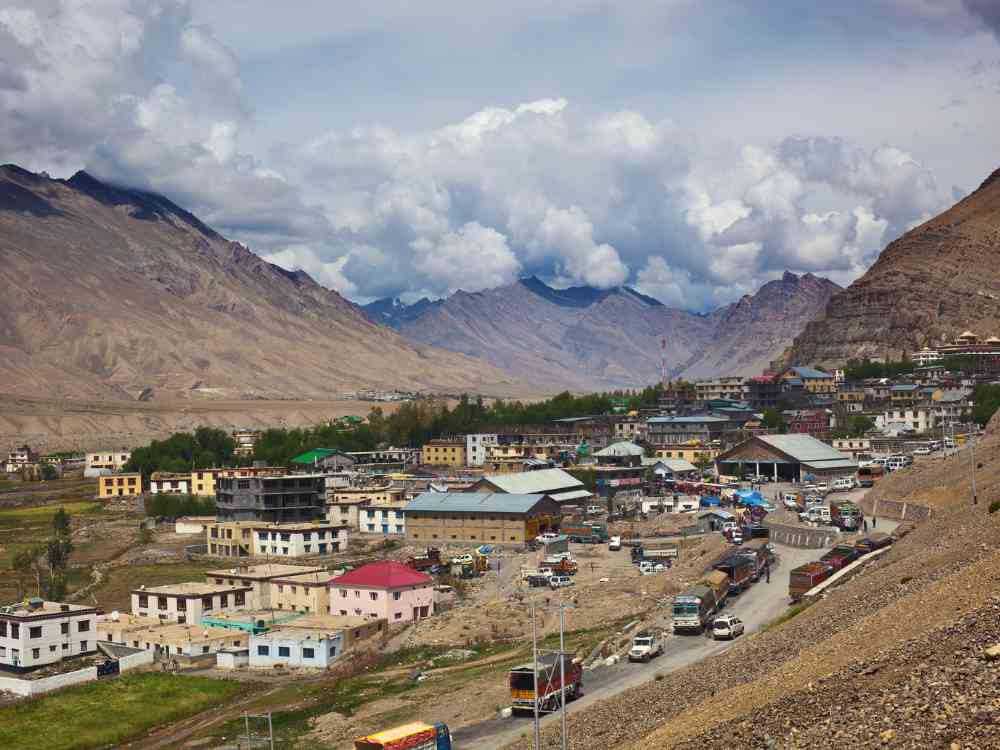
- From Kaza: Key Monastery is conveniently located approximately 14-15 kilometers from Kaza, which serves as the administrative headquarters and the primary town of Spiti Valley. Taxis and shared cabs are readily available for hire from Kaza, providing a relatively quick and easy commute to the monastery.
- From Manali: The Manali-Leh Highway, traversing the challenging yet scenic Rohtang Pass and Kunzum Pass, is the most common route to reach Spiti Valley from Manali. This high-altitude route is typically open from June to October, depending on snow conditions. Regular buses operated by HRTC (Himachal Road Transport Corporation) and numerous private taxi services ply this route, offering both economical and comfortable travel options.
- From Shimla: The Shimla-Kaza route, which journeys through the picturesque Kinnaur Valley, offers an alternative but considerably longer approach to Spiti. While it is a longer journey, this road generally remains open for a longer duration of the year compared to the Manali route, making it a more reliable option during the shoulder seasons. HRTC buses and private taxis are available for this route as well.
Key Monastery generally does not impose a formal entry fee for visitors, aligning with the spirit of Buddhist hospitality. While specific opening and closing hours might vary, the monastery is generally accessible to visitors during daylight hours.
Nearby Attractions near Key Monastery
Beyond the captivating Key Monastery, the surrounding Spiti Valley offers a wealth of other fascinating places to explore:

- Kibber Village: Situated at an astounding altitude of approximately 4,270 meters (14,010 feet), Kibber was once considered one of the highest motorable villages in the world. It offers breathtaking landscapes, traditional Spitian architecture, and a genuine glimpse into the daily life of the resilient local inhabitants. It also serves as a base for various treks and wildlife spotting.
- Chicham Bridge: A marvel of engineering, the Chicham Bridge is one of the highest suspension bridges in Asia, soaring at an elevation of over 4,000 meters (13,000 feet) above a deep gorge. This dramatic bridge connects Kibber village with Chicham village, offering exhilarating views and a thrilling experience for those who dare to cross it.
- Tashigang: Another high-altitude village located not far from Key Monastery, Tashigang is known for its serene environment and picturesque views. It offers a more secluded experience and is a great spot to simply soak in the tranquility of the Himalayas.
Accommodation Options
When planning your stay in the vicinity of Key Monastery, you have a few options:
- Staying in Kaza: Kaza serves as the primary hub for tourists in Spiti Valley. It offers the widest range of accommodation choices, from budget-friendly guesthouses and homestays to a few more established hotels. Staying in Kaza provides easy access to amenities like ATMs, restaurants, and other services, making it a convenient base for exploring the entire valley.
- Nearby Homestays: Several smaller villages surrounding Key Monastery, including Kibber and Langza, offer authentic and comfortable homestay experiences. These homestays provide a unique opportunity to live with local families, savor traditional Spitian cuisine, and gain deeper insights into the local culture and way of life. They typically offer basic amenities but an unparalleled cultural immersion.
- Monastery Stay: While not widely advertised or readily available to all tourists, some monasteries in the Spiti Valley, including potentially Key Monastery, may offer very basic accommodation for a limited number of travelers. This is usually in exchange for a small donation or, in some cases, a period of volunteering. Such stays offer an incredibly unique and intimate experience of monastic life. It is highly advisable to inquire locally upon arrival at the monastery if this is an option and to respect any conditions or limitations.
Explore More: Spiti Valley Hotels vs. Homestays
Tips for Travelers
To ensure a smooth and enjoyable trip to Key Monastery and Spiti Valley, keep the following tips in mind:
- Carrying Enough Cash: ATMs are scarce in Spiti Valley, with Kaza being the primary and often only point for cash withdrawal. Connectivity can be unreliable, so it is highly advisable to carry a sufficient amount of cash for your entire trip, including for transportation, food, accommodation, and any unforeseen expenses.
- AMS Precautions: Due to the consistently high altitude of Spiti Valley, Acute Mountain Sickness (AMS) is a real concern. It is crucial to acclimatize gradually by spending a day or two in Kaza before venturing to higher altitudes.
- Respecting Local Customs: The Spiti Valley is home to a deeply rooted and devout Buddhist community. It is paramount to be mindful of and respect their local customs, traditions, and religious practices. A simple gesture like greeting locals with a warm “Julley” (which means hello, welcome, goodbye, and thank you in the local dialect) can go a long way.
Key Monastery is far more than just a historical monument; it is a living, breathing center of Buddhist culture, learning, and spirituality nestled in the remote, awe-inspiring Himalayas. A visit to Key Monastery Spiti offers a truly unparalleled opportunity to witness ancient traditions, marvel at its unique fortress-like architecture, and immerse oneself in the profound, serene spiritual atmosphere that pervades the entire Spiti Valley. For anyone with an interest in rich heritage, captivating history, and the profound world of Himalayan Buddhism, Key Monastery Kaza is an absolutely essential and unforgettable stop on their journey.
Key Monastery FAQs
Key Monastery is absolutely iconic! It’s super famous for its incredible fortress-like structure, sitting majestically on a hilltop with breathtaking views of the entire Spiti Valley. Plus, it’s a really important hub for Tibetan Buddhist learning, filled with ancient art, old writings, and beautiful thangkas. It’s just got this amazing spiritual vibe that everyone loves!
Getting there is pretty straightforward once you’re in Spiti! It’s only about 14-15 km from Kaza, which is the main town. You can easily grab a taxi or a shared cab from Kaza. To get to Kaza itself, most people come from Manali (though that route’s only open seasonally over the high passes) or from Shimla, which is a longer but often more reliable road through the beautiful Kinnaur Valley.
That’s a great question! While it’s not like a regular hotel, Key Monastery sometimes does offer very basic accommodation to a few visitors, usually if you make a small donation. It’s an incredibly unique way to experience monastic life firsthand. Otherwise, you’ll find plenty of guesthouses and homestays in Kaza and charming nearby villages like Kibber.
Actually, there isn’t a Key Monastery in Ladakh! Key Monastery is definitely located in the stunning Spiti Valley, which is in Himachal Pradesh. I think sometimes people get them confused because both regions are high-altitude, cold deserts with a very strong and beautiful Buddhist culture, so they feel quite similar.
You know, Key Monastery is incredibly ancient! It’s believed to have been founded way back in the 11th century by a monk named Dromtön. So, that makes it roughly a thousand years old! It’s truly amazing to think it’s stood there for so long, surviving all sorts of invasions and even earthquakes over the centuries.
Explore the best Spiti tour packages with JustWravel.